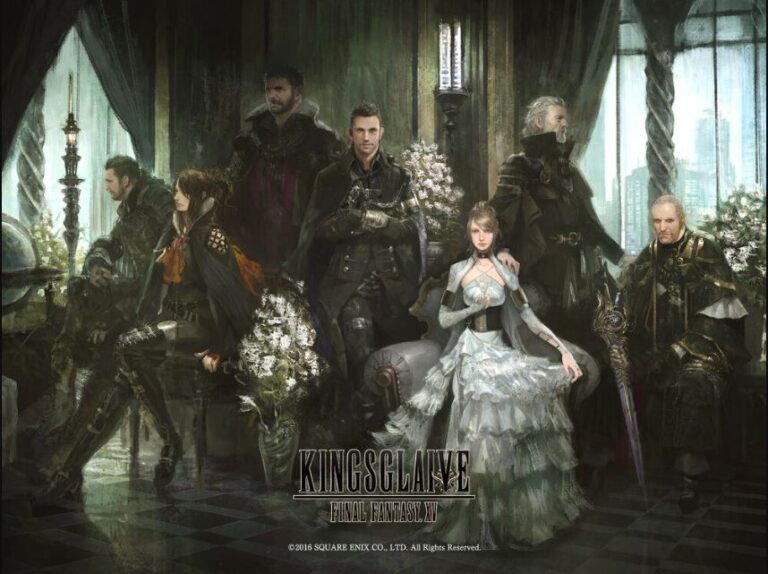
I wish to preface this series of retrospectives with the fact this was NOT planned. A good friend of mine recently put the Final Fantasy XV bug in my ear once again, and I figured I’d take a look at the entire compilation. You might be asking, “How much content could there possibly be for Final Fantasy XV?” Well let’s just say we’re going to be seeing XV for the next month. But let us go to the first piece of content released for the Final Fantasy XV compilation, This is Kingsglaive!
Introduction & Pre-Production
Now, in order to explain why the feature film Kingsglaive exists we need to take a look at the elongated and troublesome development of Final Fantasy XV. Despite starting life as the Tetsuya Nomura-led Final Fantasy Versus XIII, it would soon be rebranded and stripped down when being transformed into the next numbered entry for the globally recognized Final Fantasy directed by Hajime Tabata. We will go into more depth on what that development window looked like for the game itself when I cover the main game. But as far as Kingsglaive is concerned, this film exists to introduce us to the world and some of the characters of Eos where XV is set, and to deliver more context on the events that happened early on in XV’s timeline.
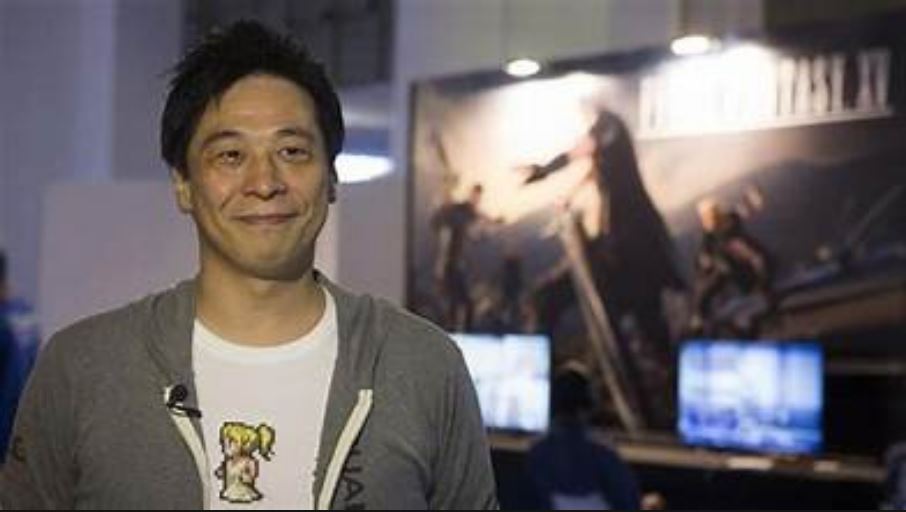
XV had an anime series and a feature film made as companion pieces to XV to offset the results of a crunched development time and to fully deliver the story that the development team wanted to tell. Despite these limitations Kingsglaive had a full production window and would be released about four months before the game’s release. There was a full theatrical release in Japan on July 16, 2016 with a limited theatrical release in USA in August of the same year.
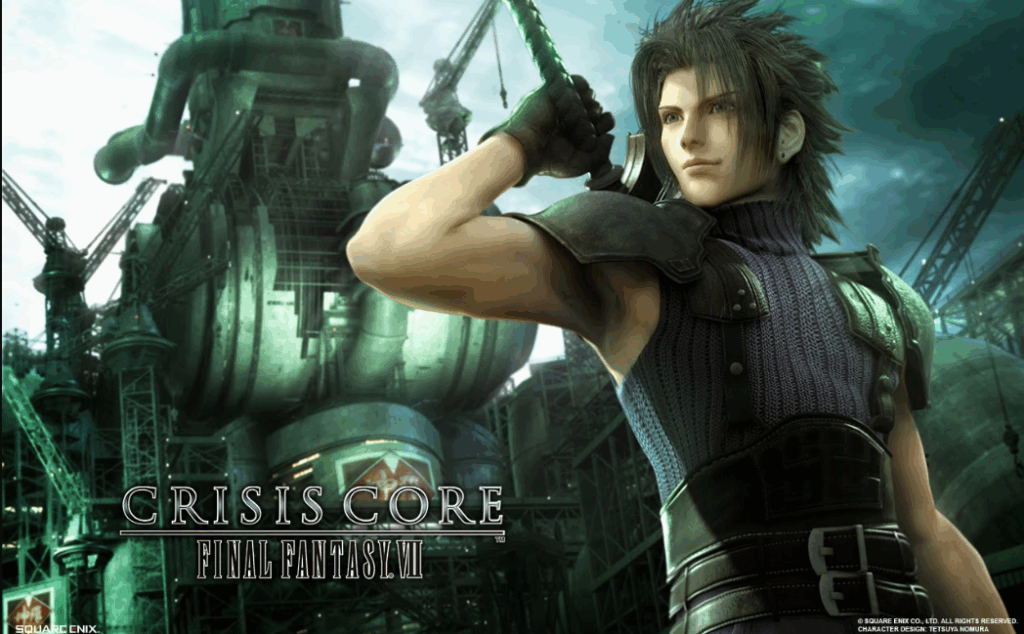
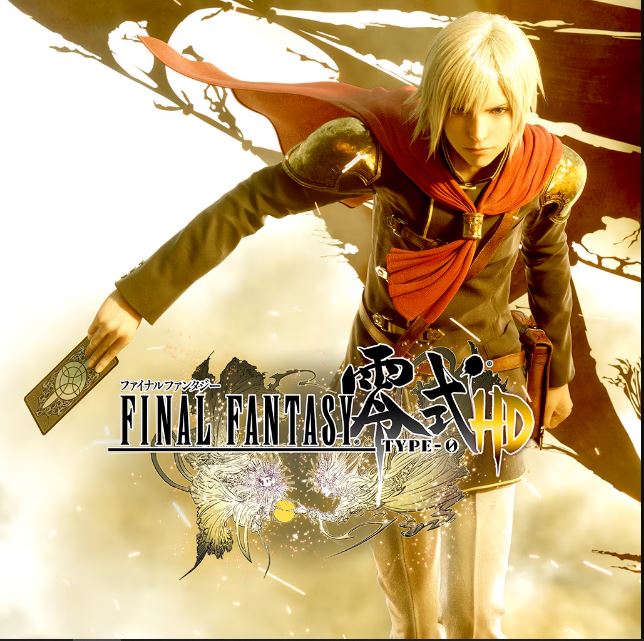
The screenplay was written by Takashi Hasegawa, Saori Itamuro and Kazushige Nojima, with the latter being the mind and pen behind Final Fantasy VII, Advent Children, Crisis Core, Final Fantasy X & X-2. Plus, Nojima most recently wrote the original lyrics for the main theme of Final Fantasy VII: Rebirth, No Promises to Keep. Kingsglaive was produced by Hajime Tabata, Shinji Hashimoto, Kosei Ito, and Larry Sparks. Tabata was also director and project lead for Final Fantasy XV following its re-branding and was also the driving force behind Crisis Core as well as Final Fantasy Type-0.
The score was composed by John R. Graham and Yoko Shimomura, whilst the film was edited by Keiichi Kojima. Kingsglaive was directed by Takeshi Nozue and there were no less than three production companies attached to the film in the form of Digic Pictures, Image Engine, and Visual Works, better known as Square Enix Image Studio Division, which debuted with Final Fantasy VII: Advent Children and was responsible for computer generated assets present in many Square Enix games.
Synopsis & Writing
Kingsglaive is set in the world of Eos, a world very similar in nature to our own if you set aside the existence of magic and the daemonic invasions that happen every night. In the world of Eos two countries have risen to prominence: The kingdom of Lucis, led by the rulers of house Caelem who are blessed by the magic of the Crystal and receive the blessings of the Gods, and the Niflheim Empire, which has secured its dominance over its borders through its boundless technological might including weaponizing said daemons that plague the land. The war between these two has raged on for as long as people can remember.
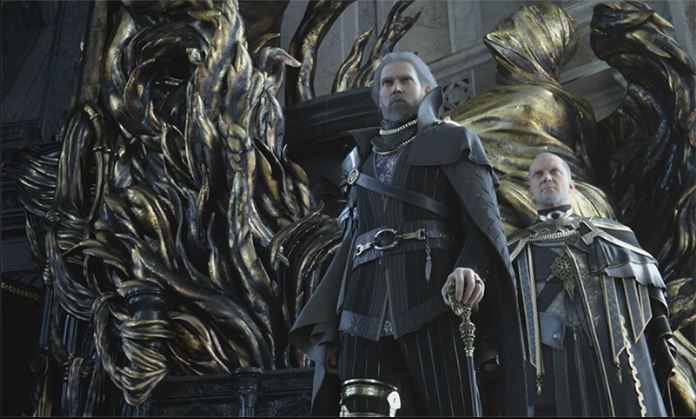
For all their magical talents the defenders of Lucis find themselves slowly and steadily losing territory to the Empire. It comes as a surprise to everyone when Niflheim proposes terms of peace to bring an end to decades of fighting. All Lucis needs to do is surrender the lands beyond their crown city for Niflheim to oversee and for Lucis to agree that its next in line, Prince Noctis, will marry Princess Lunafreya of Tenebrae, a province under imperial rule. Faced with the continued conflict and considering what is best for his people, King Regis agrees to these terms, for all he can do is entrust his fate and that of Lucis to the Crystal as all is within the Gods’ designs and all that is to occur is within reason for them.
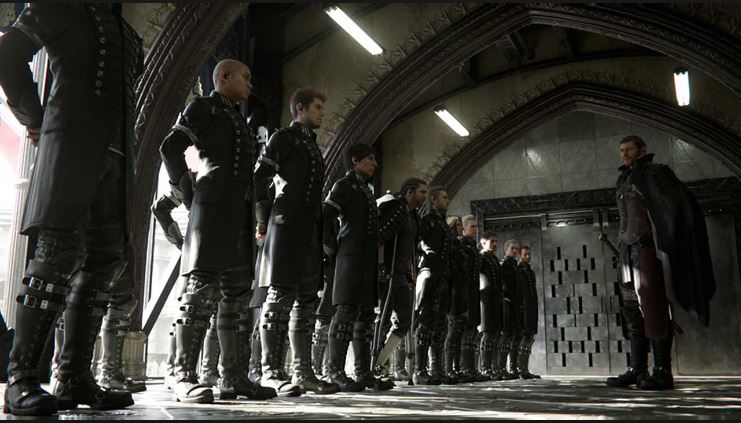
If you have played XV or are familiar with how the story starts you are well aware of how this tale comes to an end. But something that is easy to forget is that this film and the narrative it tells were everyone’s introduction to Eos and the people within it. And on a personal level I did not watch this film until I had already finished the game. The fall of Insomnia is a critical event that shapes the entirety of XV’s story, and we see its impact throughout the game of XV. But seeing that fall in detail is possibly one of the greatest strengths of this film.
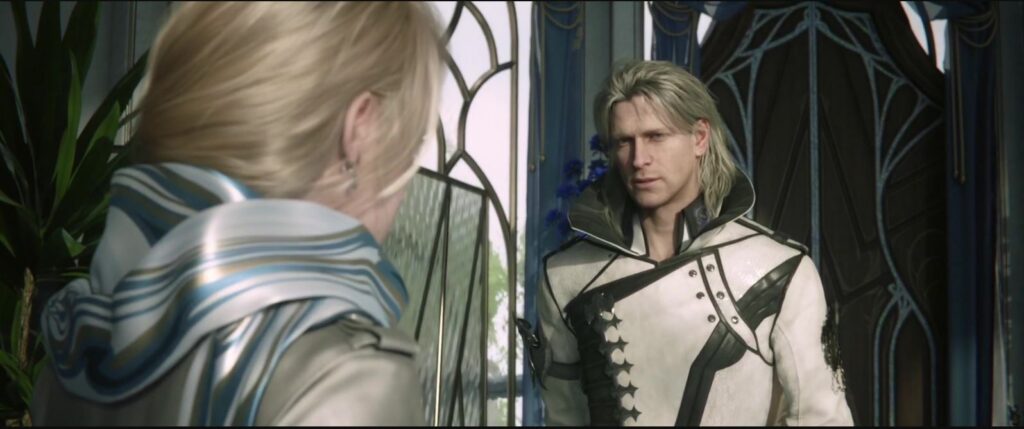
It would have been very easy for Kingsglaive to come off as repetitive and redundant of the overall saga. But the film circumvents this by focusing on characters and topics that were either left unexplored or received very little screentime. The strongest example of this is Ravus, older brother of Princess Lunafreya. He plays a role in the events of both Kingsglaive as well as the main game. But this film is essential in establishing his motivations as the main game hardly dives into what makes that character the way he is.
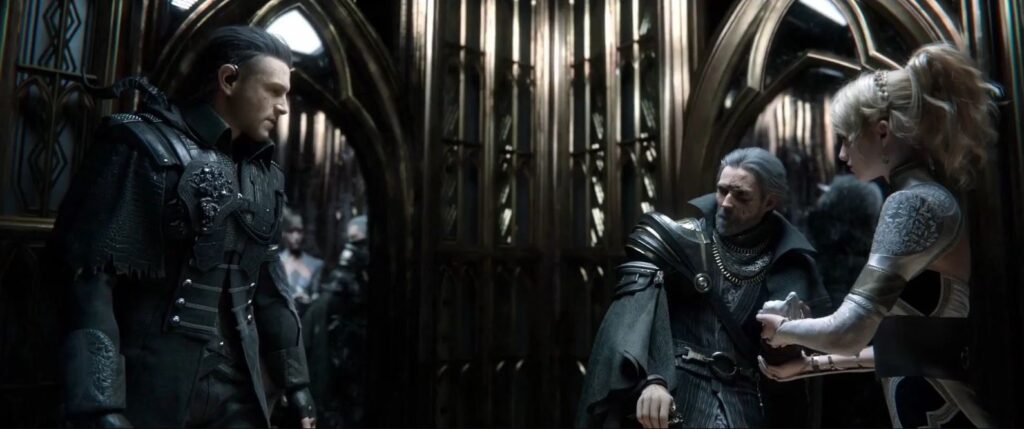
Kingsglaive is very deliberate in the story it wants to tell, seeking to expand on the fall of Lucis and all aspects of that story. Our protagonist Nyx Ulric, a member of the kings guard, is never mentioned by name in the main game as the main characters never interacted with him, but we still feel his legacy across the saga. Heck, the main character of XV, Noctis, doesn’t even appear in this film outside of a post credit shot that is meant more as a tie-in with the story of XV, and actually has very little to do with the story this film is telling.
The core themes of XV occasionally intersect with the core themes of Kingsglaive. They are doing two different things but just happen to be two parts of the same story. I very much enjoyed what this film had to offer as someone who enjoyed what XV had to say and the story it told. However, the film at release was our introduction to Eos and left people with a lot of questions as to how the world worked; questions that XV is more adept at answering. I can see how people took issue with that, but I find that Kingsglaive is an extension of XV’s story, not a replacement or substitute, but merely another piece of that story. The development of XV left many things on the cutting room floor and I’m glad this piece of the story exists in some form at least.
Presentation & Score
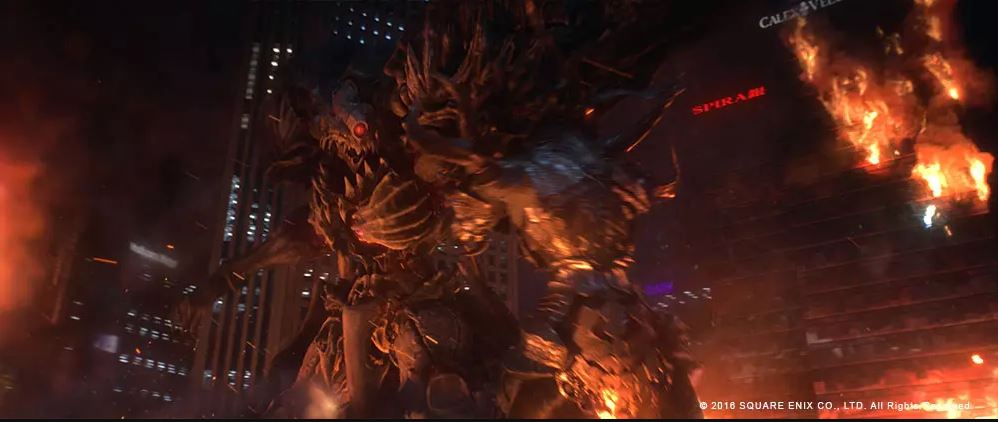
Now, while Kingsglaive drew its fair share of criticism at release for its story feeling like a smaller part of another piece of media, what people praised the film for was its effects. The entire film is computer generated, from the environments to the people. However, the people are well grounded thanks to the painstaking efforts made in motion capture. Among the studios working on this film was Visual Works, which has worked on various Square Enix projects as its in-house CGI team. The first game they worked on was 1997’s Final Fantasy VII whilst the first feature film made by this studio was none other than Advent Children. This itself was a film that was rather mixed in its reception. But visually the film was ahead of its time in terms of visual effects and the team brings that to the forefront once again in Kingsglaive. The team behind Kingsglaive is still active today working on titles such as Final Fantasy VII: Rebirth and Final Fantasy XVI.
When it comes to music composition, Kingsglaive is an odd beast as it does contain works composed for the main game from Shimomura, but it also had the works of Graham included, specifically as a contrast to Shimomura’s work. The director described the score as “Shimomura meets Hollywood.” Nozue specifically wanted to create an ambiguous atmosphere and a sense of impending tragedy and loss, themes and motifs that fit what the film was going for.
The film also contains strong performances from just about everybody. Sean Bean as King Regis gives a spectacular performance that feels consistent with Jim Pirri’s take on the character who would voice Regis in the main game. I could write you a novel about how much I adore Darin De Paul as Ardyn Izunia, which you might still get when I cover the main game.
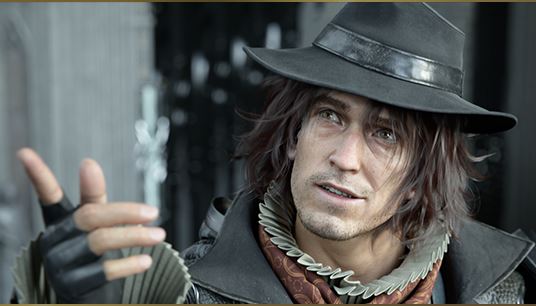
Kingslgaive received a mixed reception upon its release with praise towards its effects, visuals, and performances whilst garnering criticism for feeling like supplementary promotional material for the upcoming Final Fantasy XV. Across the film’s theatrical runs it raised $6.4 million whilst bringing in an additional $4.5 million across home video sales and rentals, bringing total sales to over $10 million by 2017.
Conclusion
As someone who always knew in the back of his mind that this film existed during my time with XV I will give Kingsglaive the highest compliment I can muster. I wish I had watched it in 2016. Out of the feature films that Square Enix has produced over the years, this is my favorite and has the most to offer for general audiences. Also, the film has a lot more weight behind its themes and narratives when viewed in connection with the rest of the XV compilation. I feel that Kingsglaive has earned a place in my collection, and I give it a recommendation for fans of Final Fantasy and fantasy movie fans in general! Special thanks to OmgFloofy for collaborating on this article!
Patron Shout-Out
Special thank you to our Patreon supporters who help to support week to week operations here at TaylorTalksEntertainment. We couldn’t do it without you:
Lisa