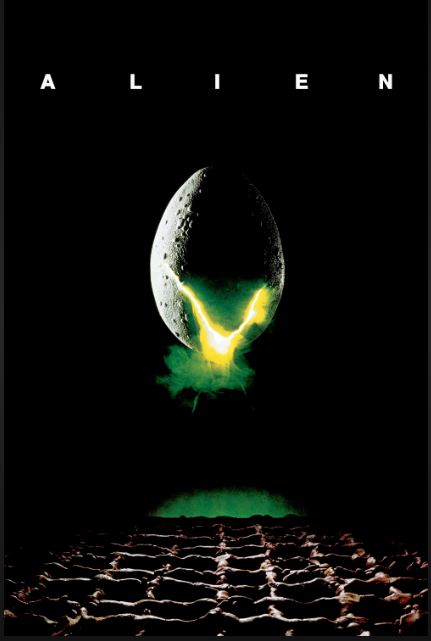
Greetings all, October is upon us and you know what that means. Spooky season is out in full force and the team at T2E thought there was no better time to return to the world of horror. Followers of our social media accounts might remember a community poll from years ago where we asked you guys which horror marathon you wanted to see in October, Nightmare on Elm Street won the poll with us covering the first three films as well as the remake. But the franchise that came in second was none other than Alien. As such the team thought it was time to go back and give Alien its time in the ominously lit spotlight. We’re starting where it all began, this is Ridley Scott’s Alien (1979)!
Introduction & Production History
The property of 20th Century Fox, the Alien franchise is a multimedia series spanning films, television, novels, and video games. However, before many of these things, Alien was irst and foremost a singular film, initially released in 1979, directed by seasoned director Ridley Scott, and written by the pair of Dan O’Bannon and Ronald Schusett. The idea for Alien originated from O’Bannon’s experience with the film Dark Star, which he worked on with Jon Carpenter and concept artist Ron Cobb. The experience of working on a science fiction film, left him wanting to pen his own script. He described, “really wanting to do an alien that looked real”.
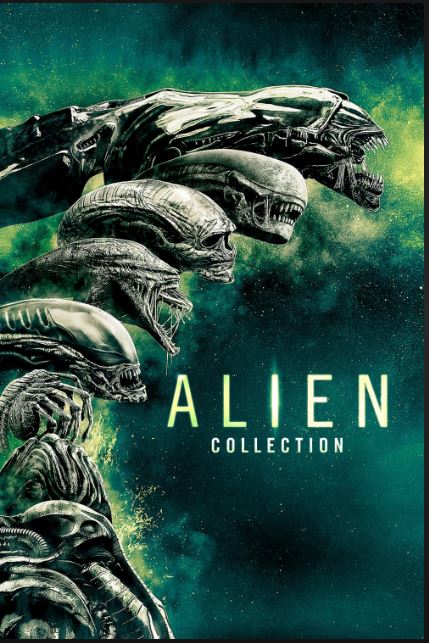
Throughout the 1970s O’Bannon worked on various projects, building contacts across the industry with Chris Foss, Jean Moebius Giruad and the one and only H.R Giger. Meanwhile, Ronald Shusett was working on an early script of what would become Total Recall and would soon cross paths with O’Bannon and the pair would start working on a film script together. The script jointly penned by the pair would go through many forms, starting as Memory, changing to a script about gremlins infiltrating a World War II B-17 Bomber in the sky, to another variation referred to as Star Beast, The script eventually became Alien. The pair then pitched the script to executives of Brandywine whom had connections to 20th Century Fox who picked up the script whilst bringing on additional writers such as David Giler, Walter Hill, and Gordon Carroll to further refine the script.
Initially, Fox was uncertain of the film’s success, citing lack of confidence in the science fiction nature of the script. This changed in the aftermath of the success of Star Wars. Science fiction as a genre was by no means new, but the surprise hit of George Lucas’ Star Wars revitalized interest in the genre and Alien was the strongest sci-fi script that Fox had at the time. Moving forward with the film, the hunt for a director ran through several names; O’Bannon had considered directing, but Fox recommended names such as Peter Yates, John Boorman, Jack Clayton, Robert Aldrich, Robert Altman, and they even considered Steven Spielberg at one point.
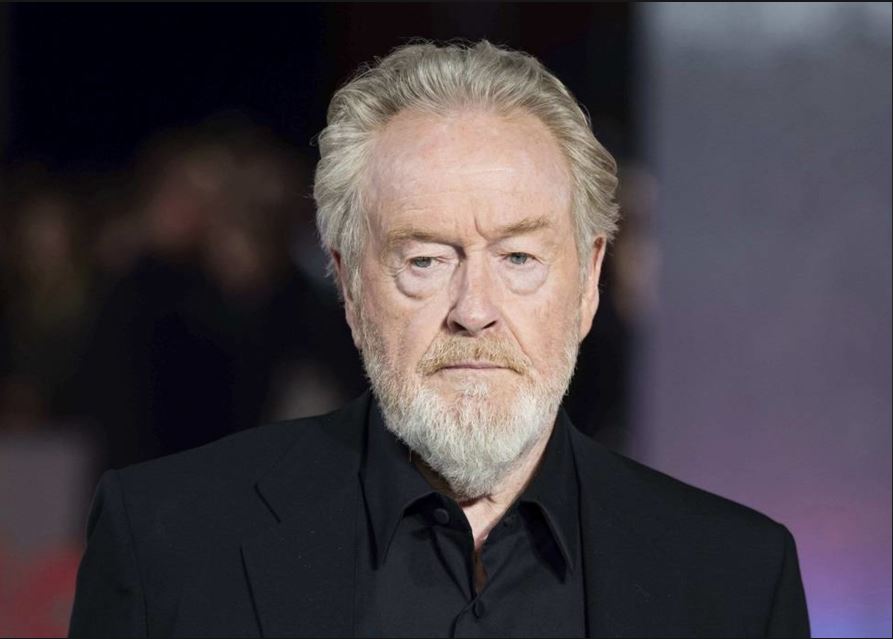
Ridley Scott
However, the producers and writers wanted someone who would take the film and its concept seriously and not treat it as another B-tier monster movie. The production team soon crossed paths with Ridley Scott, impressed by his work on 1977’s Duelist. Ridley drew up storyboards to present to executives at Fox, highlighting the film’s emphasis on horror rather than fantasy. The executives were beyond impressed and doubled the working budget for the film upon seeing Scott’s storyboarding. The production team was rounded out with composer Jerry Goldsmith as well as creature effects designer H.R Giger, whom the writers had worked with previously.

H.R Giger
Synopsis & Writing
Set in the distant future of 2122 the crew of the Spacetug The Nostromo are on their way back to Earth after a successful contract. However, matters complicate when the ship’s automated systems wake them from cryo sleep as they are receiving a distress signal from a nearby planet. Orders from the company are to investigate said signal, upon landing on this mysterious world when one of their crew members is attacked by an unknown lifeform. When this lifeform suddenly dies overnight, the crew assumes that their mission is over, but it is here when the nightmare truly begins.
Alien is a relic of another time, in which well-paced character-driven, truly suspenseful horror was not the exception, but the norm. For a script penned in the ‘70s its material, quality and sensibilities have aged exceedingly well. In fact, the only thing that doesn’t age particularly well is the portrayal of future technology as imagined in the late 1970s, but that is a common oversight of the science fiction genre. The character writing and overall script are still exceptionally strong even today.
This film might contain some of the best pacing I have ever seen in a film, horror or otherwise. The story opens with our cast of characters awakening from Cryo and going about their duties in a way that shows their relationship to each other as well as their role on the ship. This doesn’t overstay its welcome, and once the xenomorph enters the fray, the pace slows down and oozes atmosphere and tension within the corridors of the Nostromo. Our characters are trapped in the vacuum of space with nowhere to go. The film’s tagline itself highlights this through “In space no one can hear you scream.” Alien is only 118 minutes in the theatrical cut of the film, keeping the pacing tight. Even the director’s cut doesn’t add much to the film in terms of runtime, which speaks to the quality of the original film’s pacing as director’s cuts of film are used to improve the pacing of said film. But Alien had very little added, as if to say there wasn’t much that needed to be done to improve the film’s script or pacing.
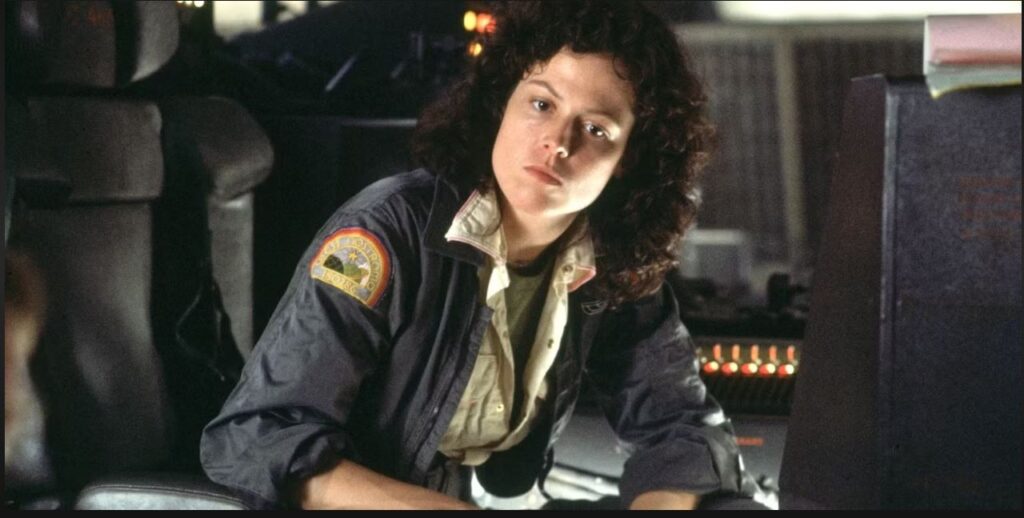
The film also plays with expectations. Upon first glance you think the charismatic Nostromo captain Dallas would be our main hero before shifting focus to now legendary character Ellen Ripley, portrayed by the one and only Sigourney Weaver, a character portrayal that inspired science fiction and horror writing for decades to come. The same extends to the iconic facehugger and xenomorph who have also gone on to be iconic inspirations across science fiction.
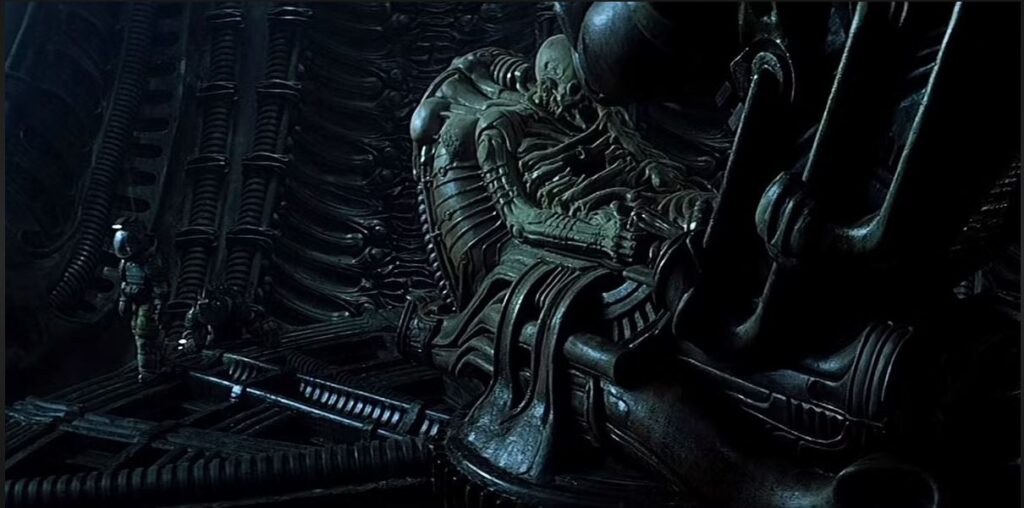
A facet of this film that isn’t as discussed nowadays is how much is left up to audience interpretation; the film opens with the Nostromo crew landing on this mysterious planet with a derelict ship with a fossilized alien corpse as well as a horde of facehugger eggs. And within the context of this film, the species of the space jockey, how the ship got there, or why it had a cargo hold full of xenomorph eggs is never directly explained. The film has stood the test of time beyond its directly stated content through the various theories, discussions and conspiracies that the film encouraged through its ambiguous storytelling. The spin-off prequel Prometheus as a film exists primarily because people were so interested in the history of the universe, and all the theories, all the discussions, which started here in 1979’s Alien because the scriptwriters left things up to interpretation and allowed audiences to be media literate.
Presentation, Score & Legacy
For a film released in 1979, the effects of Alien have aged exceedingly well, through the designs of H.R Giger. O’Bannon had worked with him prior and insisted that Fox hire him on as a creature designer. Fox was initially hesitant to do so before producers at Brandywine pushed to hire him as well, and Alien would not be what it is today without Giger’s iconic designs for both the facehugger and xenomorph. The film utilizes a variety of techniques for its practical effects including; puppeteering, animal intestines, fiberglass props, and false body parts for the more gruesome scenes. Now, while a majority of the film’s effects have aged exceedingly well, there are exceptions.
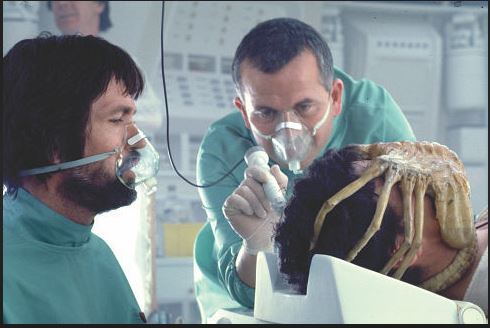
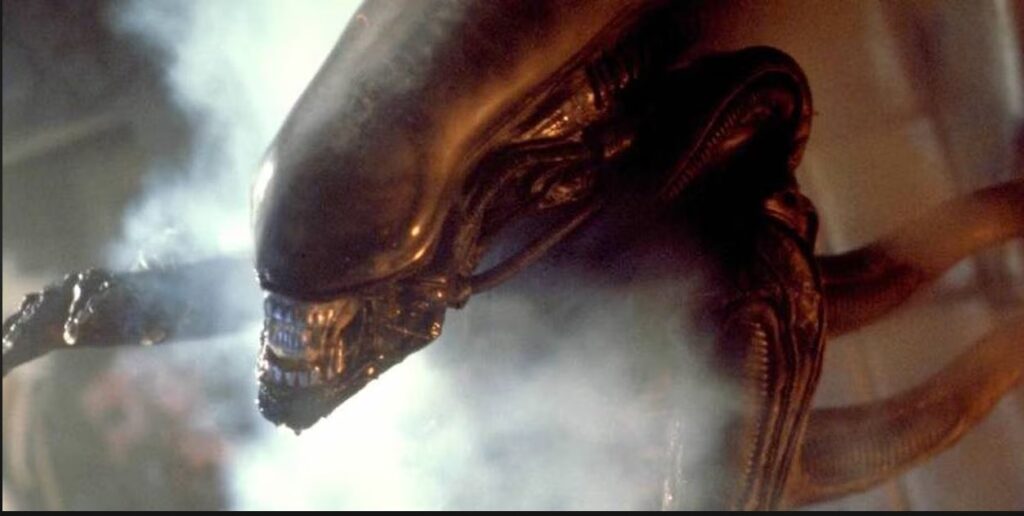
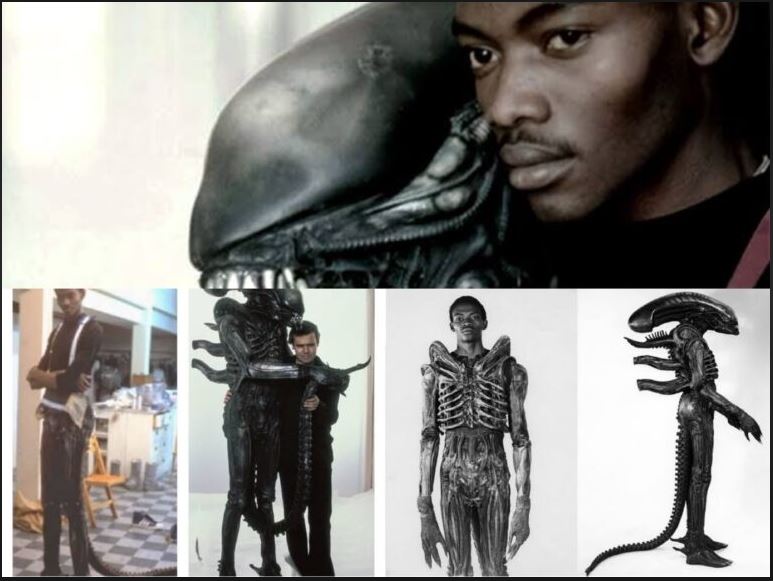
The climax of the film features a segment where they display the head of a character who had been decapitated with the character’s head propped up on a table through a false bottom. But then they swap it out for a fake of the character’s head mid-shot and it looks rough by comparison. It is by far the roughest visual effect in the movie, but it is also a very small part of the film. The chest burster is portrayed by a small practical effects puppet whilst the fully grown xenomorph is a man in a suit, again designed by Giger. The man who played the Alien was Bolaji Badejo, xenomorphs traditionally in the franchise have been huge at over seven feet tall once they moved purely CGI and puppetry portrayals. But Badejo set the basis as he was six foot 10 inches tall. Badejo only acted in the 1979 original film and despite being offered a returning role in the sequels, he declined in order to run his own art gallery in his home country of Nigeria. He unfortunately passed away in 1992 at the age of 39.
Music composition and placement is critical in any piece of media, especially film. Jerry Goldsmith composed a lot of music for the film that ended up going unused as Ridley Scott felt that certain scenes were heightened by not having any music. Music composition comes in two flavors for creation and use in visual mediums such as film, television and video games where many songs are composed independent of scene context and placed by the director as they see fit. The second is when music is composed to fit a specific scene beat-for-beat. Where you put music is just as important as where you don’t put music. Some of Goldsmith’s work went unused not because Ridley Scott thought it was bad, but rather Scott wanted to let certain scenes breathe as the tension was heightened by the lack of music while letting the natural ambiance of the scene breathe.

Jerry Goldsmith
Alien launched with mixed critical reviews, before shifting to critical acclaim long term hailing the film as one of the best films of 1979 and one of the most influential science fiction films of all time. The film re-entered the public consciousness in 2003 when the director’s cut was released and it maintains a unique style even against its various sequels and spin offs throughout the decades.
The film was also a smashing box office success, making $180 million USD against a $14 million budget not to mention the entire franchise it spawned. It also left a profound impact on science fiction culture referenced in materials such as Spaceballs, Metroid, Halo, Dead Space, and the list goes on.
Conclusion
True masterpieces stand the test of time and change their mediums for the better and Alien most definitely qualifies. If you desire a sci-fi horror film that understands pacing character, and substance Alien is a must watch, I wholeheartedly recommend Alien!