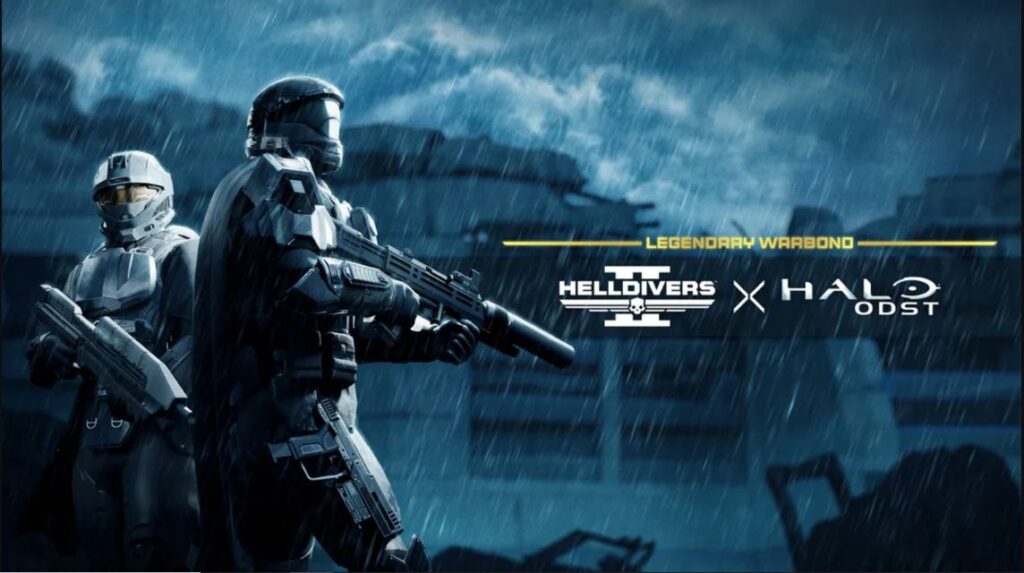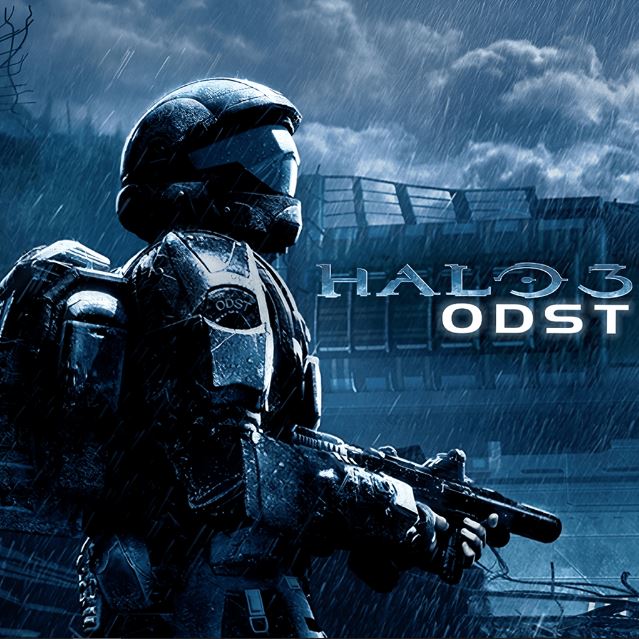
Greetings all! Given the recent announcements in the game industry, particularly as it relates to the managed democracy of Helldivers 2, I thought it might be the appropriate time to cover one of the inspirations for the title. Let us wait no longer to jump into the world of Halo and prepare to drop. This is Halo 3 ODST!
Introduction & Pre-Production
Since this is the first time the team here has covered Halo on the site, a lite history lesson is in order. Halo, as a series has developmental roots going all the way back to the ‘90s since it was the brainchild of the game development studio Bungie, the creators of Marathon, Destiny, and most famously Halo. The series has grown into a multimedia franchise transcending mediums, to the likes of games, books, TV series, and films. Yet at its heart it is a (primarily) First person Shooter, or FPS for short, franchise. Following Bungie’s work on Marathon the team went to work on their next project; an FPS title that would go on to become one of the most pivotal games for the genre. And following Bungie acquisition by Microsoft in the year 2000, it would also become one of the pillars that made the Xbox a household name, at least for a time.
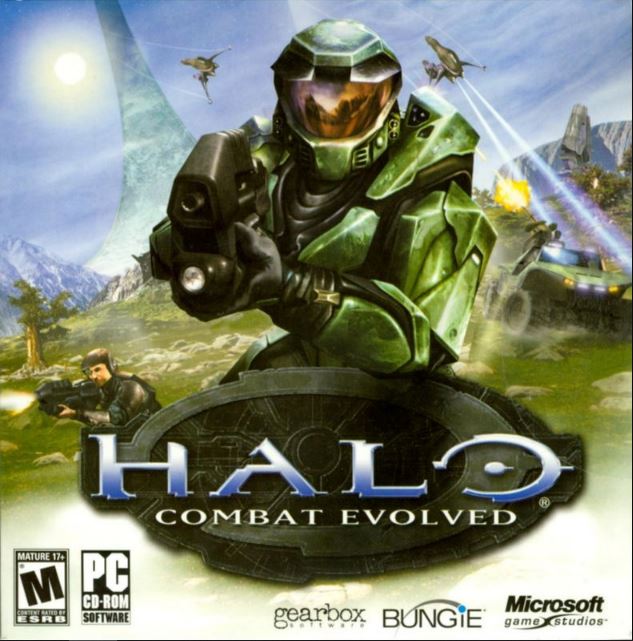
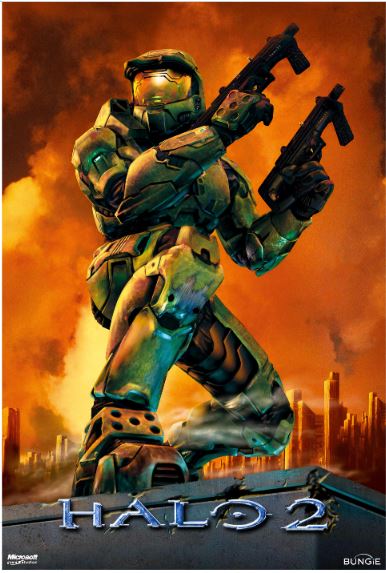
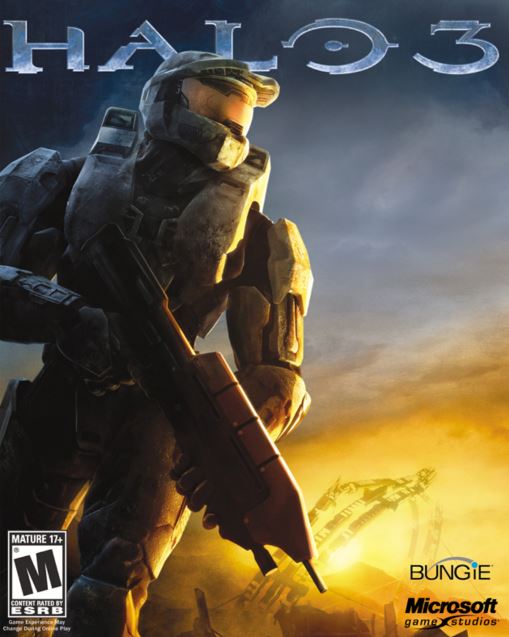
Following the release of Halo Combat Evolved in 2001 as the launch title of the original Xbox, the series would become immensely popular, spawning numerous sequels and spin offs, few more popular than the likes of Halo 2 and 3. Microsoft, eager for more Halos to capitalize on, requested the development of an additional game to fill out Bungie’s contract with the tech company. And as this was in their contract, Bungie had no choice but to comply.
Initially the title was Halo: Recon, a title meant to be based around a stranded lone marine in the Halo universe trying to find his separated squad. Recon was to be a campaign DLC add-on for the likes of Halo 3 by request of Microsoft, yet project leads Joe Staten and Paul Bertone didn’t want to reuse campaign assets. So, Recon instead become a full-on game added to the Halo universe. The title was announced to the public as Halo: Recon on October 10, 2008 when it was revealed to be a prequel to the story of Halo 3 with an expansion of said game’s mechanics.
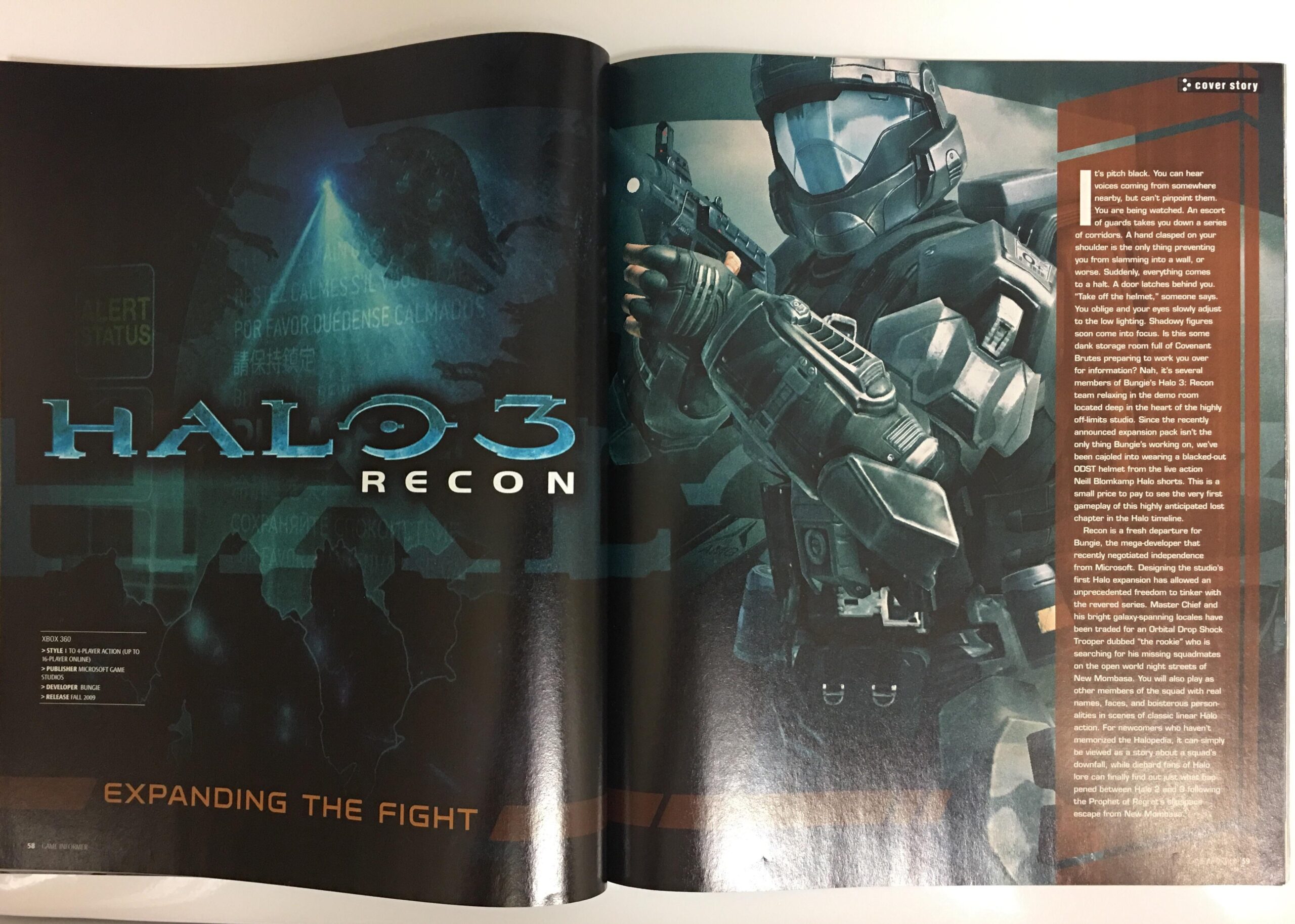
However, conflicts arose between Ubisoft and the Tom Clancy estate due to the similarities in name between then titled Halo: Recon and the Clancy-based series, Ghost Recon. Therefore, Halo: Recon instead became Halo 3:ODST. This would not be the only controversy attached to the game as ODST was revealed to retail for $60, same as the likes of Halo 1-3. However, this game only offered a campaign experience that could be played solo or co-operatively with friends alongside the new co-operative firefight mode. The matchmaking multiplayer suite that Halo 2 and 3 had become synonymous with, would not be included, raising questions as to whether ODST was worth that $60 price tag.
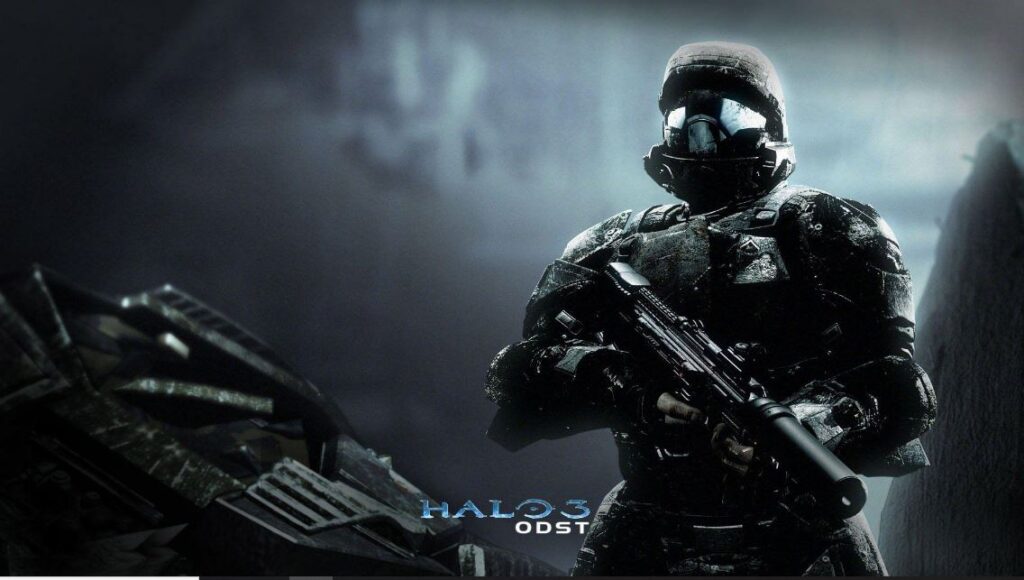
Halo 3: ODST saw release on September 22, 2009 for Xbox 360, whilst getting a digital re-release as part of the Halo Master Chief Collection, as a DLC ironically enough for Xbox One, series consoles and Windows PC. The project was once again directed by Joseph Staten who also served as lead writer. Programming was overseen by the team of Paul Bertone, Lars Bakken, Dan Miller, and Alex Pfieffer, whilst music composition was overseen by a pair of veterans to the Halo franchise Marty O’Donnel and Michael Salvatori.
Synopsis & Writing
The story starts with a recap of the human covenant war before dropping players directly into the Covenant Assault of the African super metropolis New Mombasa on Earth from the beginning of Halo 2. Here, we are introduced the ODST squad of Alpha Nine preparing to air drop into New Mombasa to reinforce the UNSC forces and repel the covenant assault. This supposedly is for them drop onto and neutralize the Covenant Super Carrier commanding the assault. However, when said super carrier makes a jump to space in a segment calling back to the events of Halo 2, the resulting shockwave scatters the squad of Alpha-Nine all over New Mombasa. You are to take command of a silent ODST recruit named Rookie and explore the embattled city in search of your squad and with luck complete the mission and get out alive…
If you’ve played Halo 2 the opening set piece of ODST is likely to be very familiar to you, and while it is heavy on nostalgia it is one of the few pieces of fanservice that ODST will resort to. The vast majority of the game’s runtime will deal with original characters, as an original scenario and pave the way for Halo 3. But the campaign of ODST is special in numerous ways in comparison to the rest of the series.
First, and chiefly among them is its perspective. Previous installments exclusively were set around the perspective of Master Chief; a spartan super soldier and savior of humanity. Up to this point the only exception had been the Arbiter missions in Halo 2, something that had been highly controversial at the time of release. This makes the choice of ODST having perspective lie with ordinary humans, average soldiers a risky maneuver. You aren’t the pinnacle of human evolution or the chosen sword of the Covenant. You are just a cog in a military machine. ODSTs are a step up from the standard marine within the Halo universe. But they still are very much average soldiers when looked at next to someone like Master Chief, the Arbiter or Sargent Johnson.
This also allows ODST to explore different character dynamics in the rest of the series, as the Helljumpers of Alpha-Nine bicker and banter like ordinary people would. The rest of the series isn’t devoid of character-rich interactions, but the change in perspective allows for new character dynamics to be explored and help ODST stand out from the crowd that is the rest of the series. The story itself, while tied once again to the humanity vs. covenant plot that the original trilogy thrived in, ODST offers a more character-driven affair, especially as the game goes all in on its investigative noir vibe. The campaign is divided into two distinct sections, the Mombasa streets segments in which the Rookie explores the nighttime city, has the option of engaging or avoiding covenant patrols, discovers audio logs that go more in depth on what exactly happened here in New Mombasa. And most critically, investigate for signs of his missing squad mates, which will then transition you to the main missions in which you play as another member of the Alpha-Nine Squad, and learn more about why the covenant invaded New Mombasa specifically…
Gameplay
Now the story is set during Halo 2, and acts as a prequel to Halo 3. But the reason Halo 3: ODST is called that specifically is because it is an expansion of Halo 3’s gameplay and is built off of the same engine as Halo 3; the Blam! Engine. Naturally, as a game that acts as an expansion of Halo 3 we have almost all of the mechanics that made that game work, with a couple of additions as well as omissions.
Let us start with what Bungie removed; Dual wielding weapons is gone and won’t be coming back to the series ever, as well as the fact that you, as the player, cannot use enemy equipment such as the power drain, bubble shield, active camo, and so on. These removals, while limiting the player’s options in combat, do help to reinforce the theme that you are an ordinary soldier and aren’t as capable as Spartans or Elites, never mind that it is a little inconsistent in the fact that ODSTs can use the Spartan Lazer and Gravity Hammer, weapons that are too heavy for normal humans to use in universe.
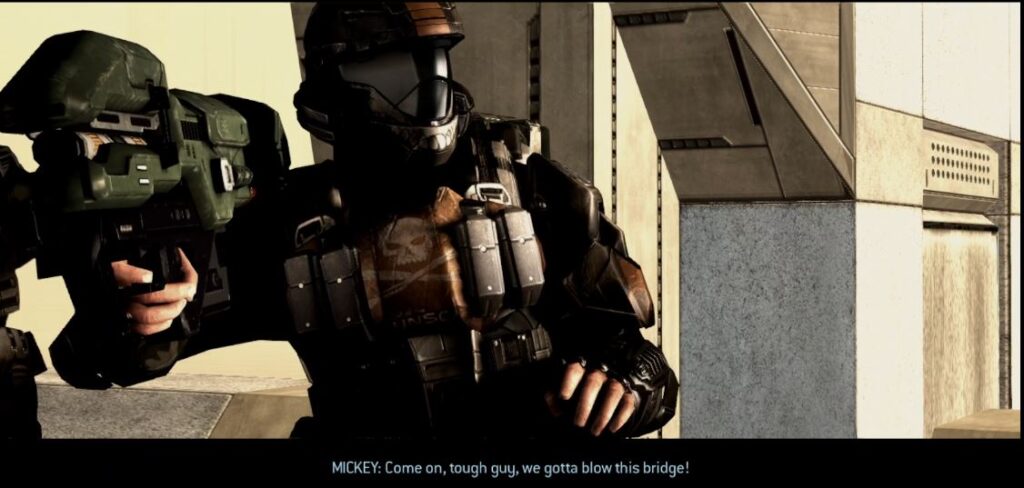
The final removal relates to the classic energy shields that often acted as a second bar of health in Halo games past and present. That is gone and instead replaced with the stamina system, As players take damage their screen will gradually turn red and once their stamina is gone, player health will drain. One aspect of the game’s balance clashes with its narrative theme of “ordinary soldiers” and that is the refined game balance.
Certain mechanics were fine-tuned to be less oppressing than their Halo 3 counterpart, and logistically that makes sense as a game released after Halo 3. In universe and in game it is a bit murkier as this game is largely easier than the previous game despite the difference in scale between protagonists. The enemy time-to-kill remains the same true, but even on the highest difficulty Legendary and Mythic player ODSTs can take more damage and survive longer than the likes of Master Chief could in Halo 3. Certain elements of the game still remain the same from Halo 3, Jackal snipers still kill you in one hit. But even compared to Halo 3 the amount of jackal snipers deployed is greatly reduced.
On the topic of additions, there are no added vehicles, but we did get a couple of new weapons, in the form of the silenced magnum and suppressed sub machine gun. Fine additions to the gameplay sandbox, which would make lovely additions to any helldiver, sorry helljumper’s arsenal. Gameplay wise, there were a number of balance adjustments made to the weapon sandbox to suit the new game, but much of its formula was Halo 3, a formula that people were fond of, so much so that Microsoft requested more of it to capitalize on.
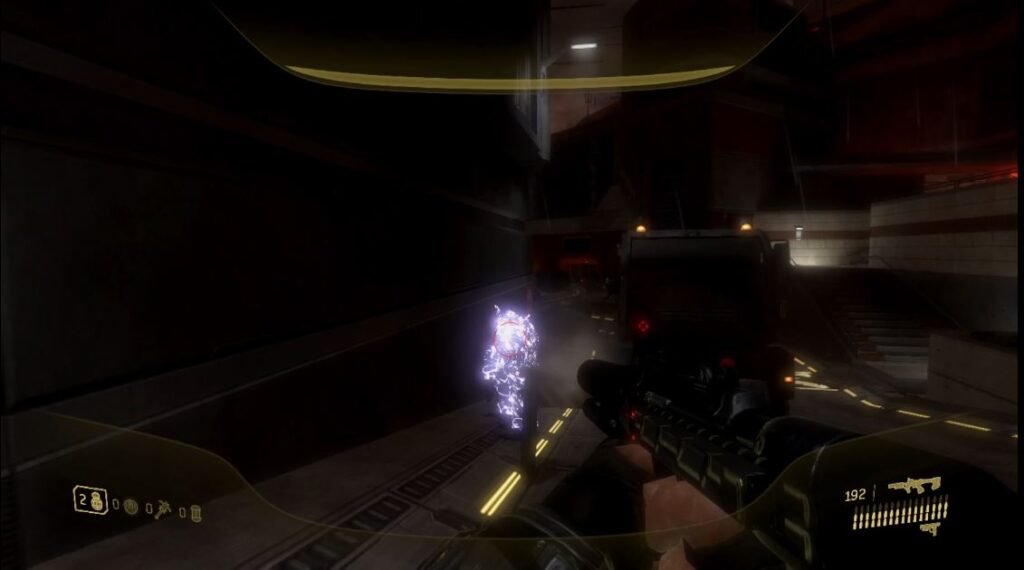
Finally, the other big new thing ODST brought to the table was the new cooperative mode; Firefight, and a mode I contemplated devoting an entire article to. Fans of later entries such as Halo Reach or the recent Halo Infinite updates no doubt will recognize the mode. But here it was a brand new feature that set the stage for PvE content outside of the campaign, ripe for expansion. But there is someone far more qualified than me to explain the details of Firefight, so I’m going to let the Sargent Major take it away, Johnson if you would…
The Master Chief Collection updates brought new content to ODST Firefight such as matchmaking, Flood Firefight and much more. If you yearn for a more cooperative multiplayer experience in Halo, Firefight is the mode for you!
Presentation & Score
As a spinoff tangentially related to the main series, ODST has reason to do things differently, and nowhere is that more obvious than in its presentation and music. Bungie’s audio director Marty O’Donnel is a big believer in emotional equity when it comes to music, and while we get some nice audio callbacks to previous entries ODST’s score is very different. It goes for somber ambiance in the nighttime streets of New Mombasa, highlighting the tension of a solo soldier searching for his lost squad. Naturally things change during each of the main missions that highlight a different form of combat or when Rookie turns a corner and comes face-to-face with a pair of hunters in a parking garage.
Conclusion
ODST was favored by critics and audiences for its different approach to the Halo Universe as well as establishing a unique atmosphere alongside new mechanics. The game stands the test of time and remains a fondly remembered game in Halo’s lineup and is a strong recommendation for fans of FPSs or those who wish to see a different side of the Halo Universe. And for those diving into the world of Helldivers; remember alone you’re dead, together you’re deadly. See you on the ground, Helljumpers!