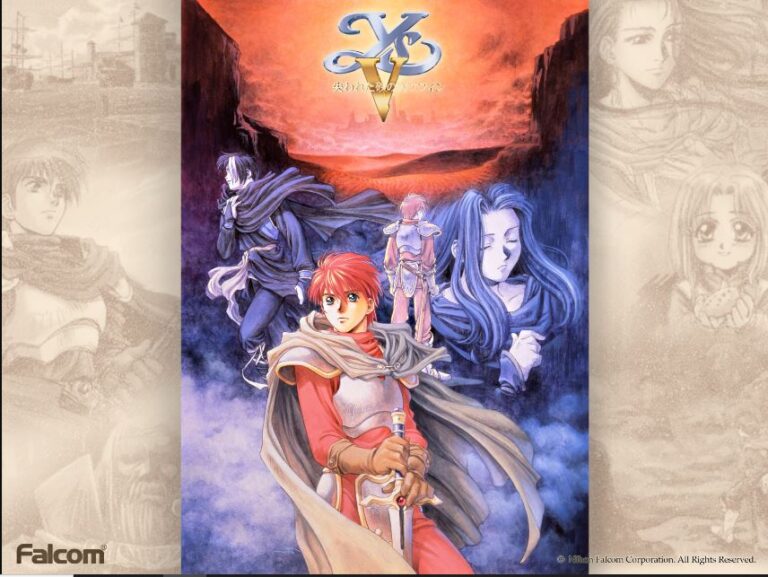
This piece has been delayed for far too long, but no longer. This article represents a rather special piece about the history of both Falcom and Ys. Falcom returned to Ys after a delayed absence, and so do we. Let us wait no longer and dive into the game that formed the blueprint for Ys games for the next decade after its release; This is Ys V:Lost Kefin Kingdom of Sand!
Introduction & Pre-Production
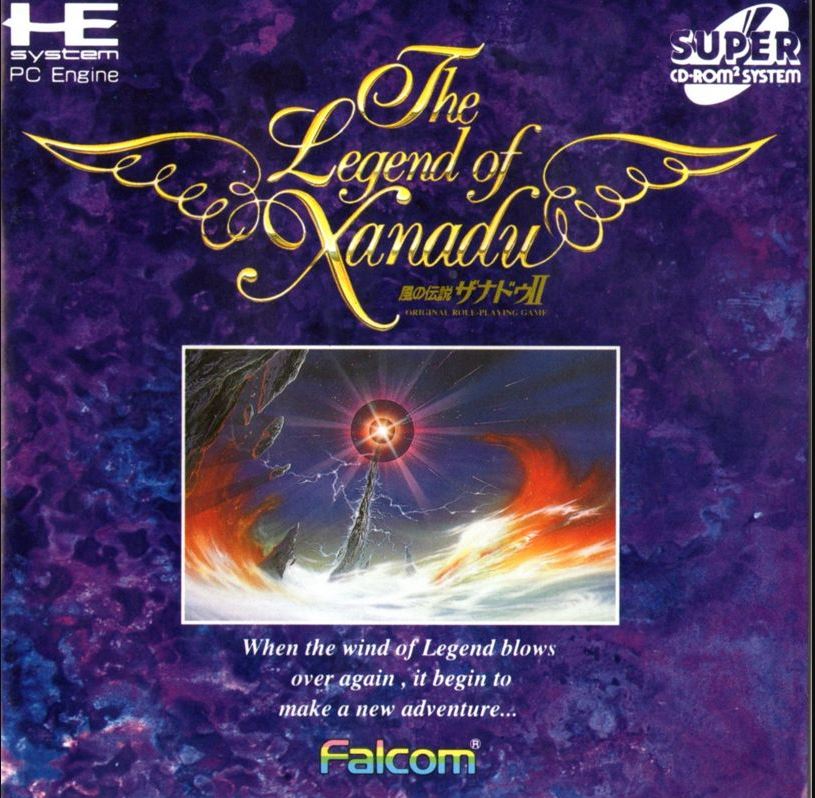
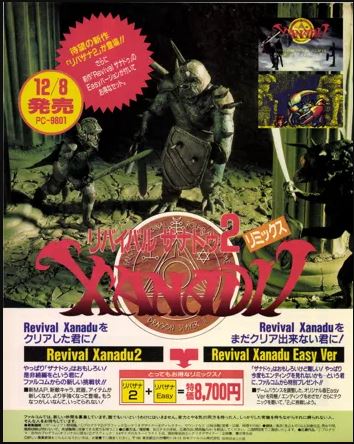
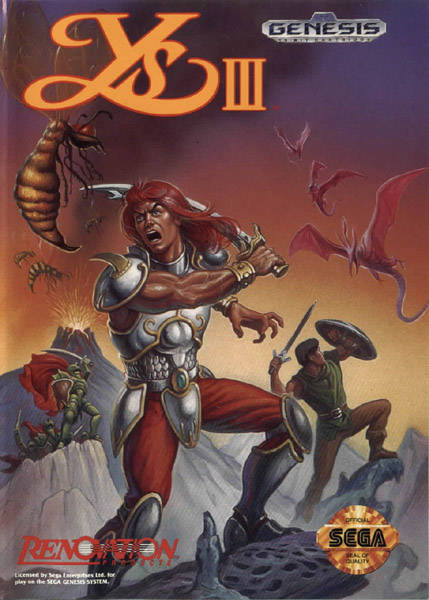
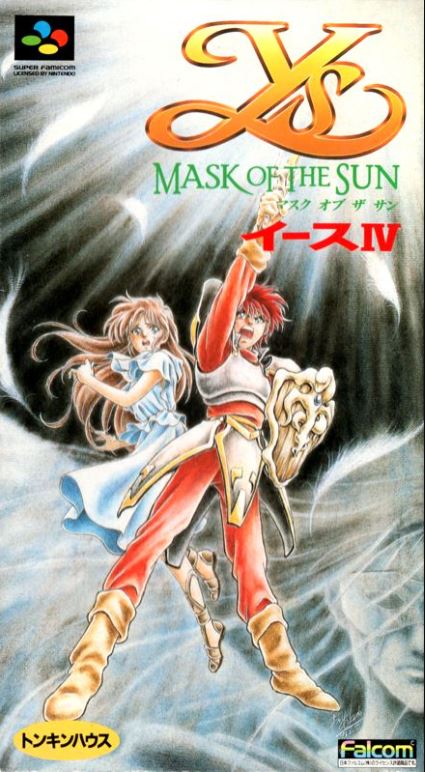
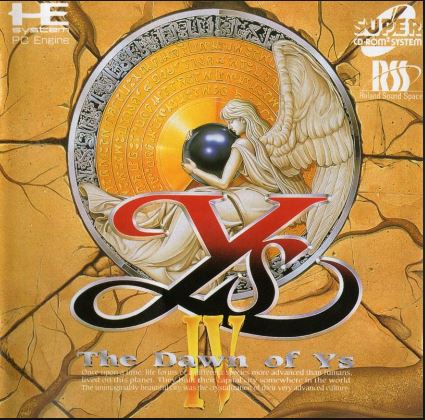
Now, let us take a step back to 1995 and look at what Falcom themselves was up to between the release of 1989’s Wanderers from Ys. Following the lukewarm reception of Wanderers’ radical change in design. Falcom began to developing a variety of other games in the six years between Wanderers and Kefin. Falcom themselves even went as far as to contract with other studios to fulfill their ideas for Ys IV, which resulted in Super Famicom’s Ys IV:Mask of the Sun as well as the PC Engine Duo’s Ys IV: Dawn of Ys. A development situation which was addressed in our previous pieces on said duology if you’re interested in learning about it. Excluding the likes of Wanderers and Kefin, Falcom released over 11 games in the six-year gap between Ys III and V. 1995 alone saw the release of Legend of Xanadu II, Revival Xanadu II Remix alongside the likes of Ys V.
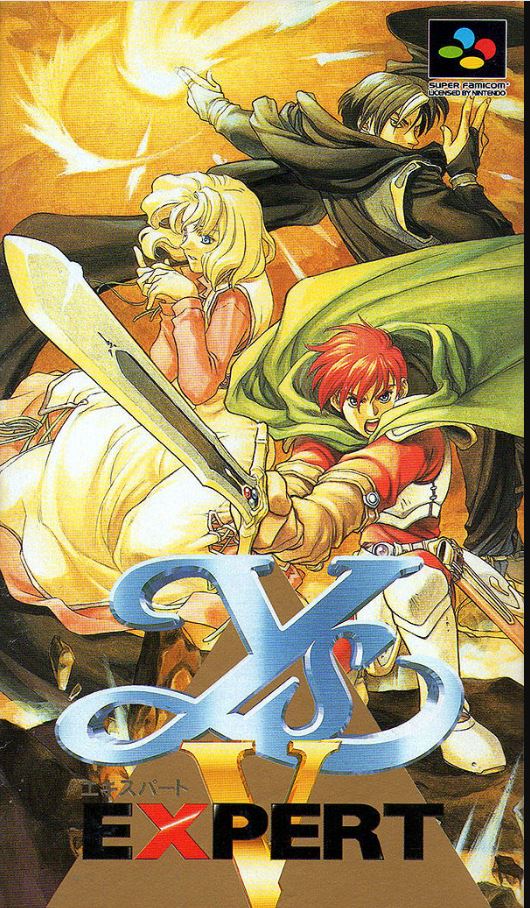
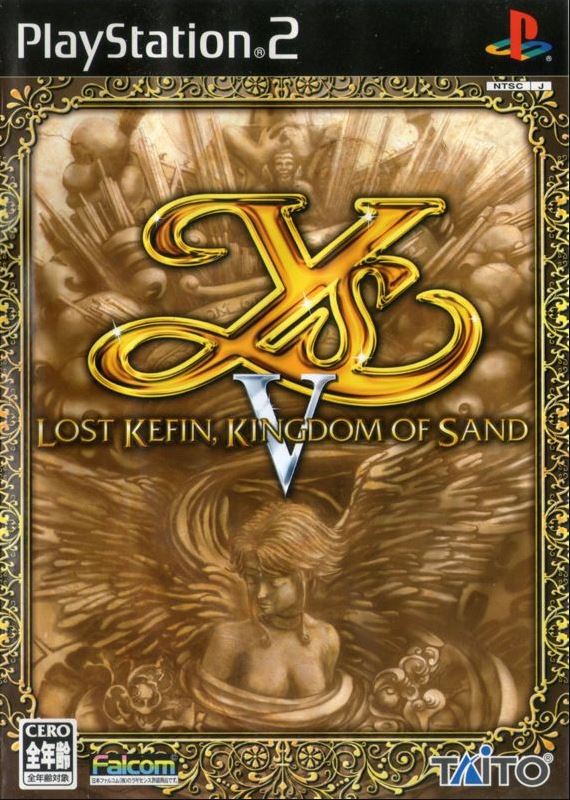
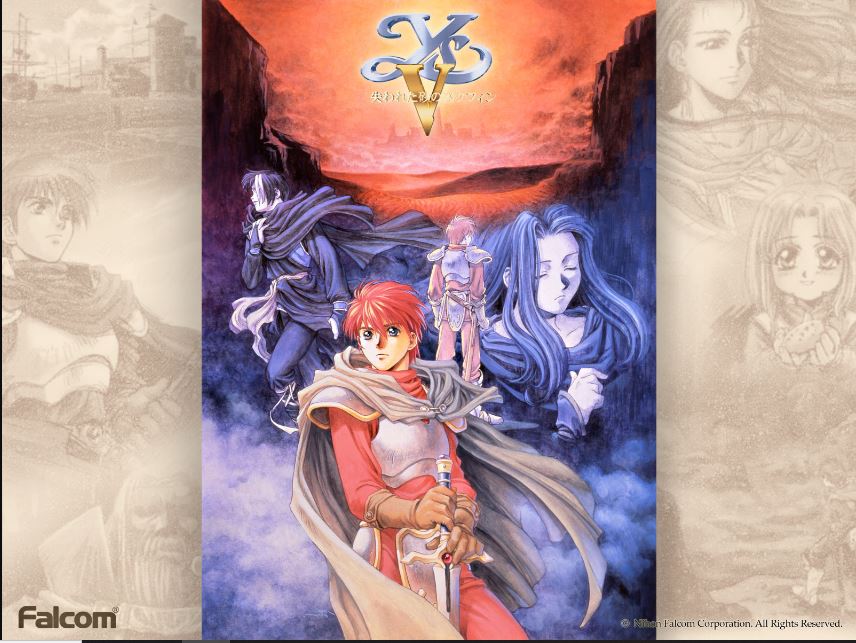
Falcom was no doubt hungry to return to the likes of Ys and show what they could do with a wealth of far more experienced action RPG development under their belt. The title originally released for the Super Famicom on December 29, 1995, with an enhanced re-release titled Ys V Expert, and also released on the Super Famicom on March 22, 1996, published by Koei Tecmo. Most recently the game received a 2006 PlayStation 2 release through the Arc System Works Developed remake and was published by Taito. The game also came to Windows PC in 2003 as part of the Ys Complete Works Collection that saw release alongside Ys VI: Ark of Napishtim‘s limited edition in the same year. Tadashi Hayakawa and Masayuki Kato served as director and producer respectively. The game’s key art as well as art direction was overseen by Minako Iwasaki and Kazuo Nakamura. And finally, the music composition was overseen by the team of Naoki Kaneda, Satoshi Arai, and Atushi Shirakawa
Synopsis & Narrative
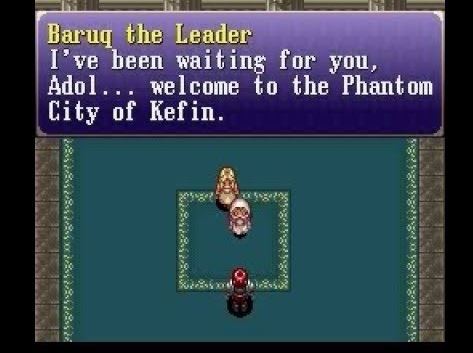
Our story begins as Adol safely makes landfall in the land of Xandria on the eastern limits of Afroca, and would love nothing more than to begin exploring the land. However upon arrival he is wrongly put in custody before meeting with Mr. Dorman, a wealthy merchant who styles himself as lord of the territory. Anyone who wishes to explore the lands of Xandria must deal with him in one way or another. Dorman seeks an ancient legend, the prized treasure of the long lost kingdom of Kefin which vanished long ago and left a massive encroaching desert in its place. Reluctantly, Adol lends his services to Dorman in order to explore the land and with luck find the remnants of the lost kingdom, not to claim its riches but rather to see the fabled land with his own eyes.
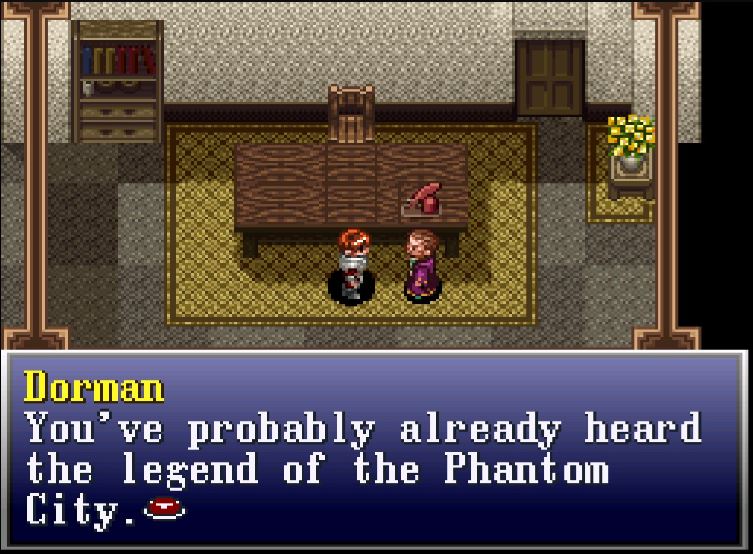
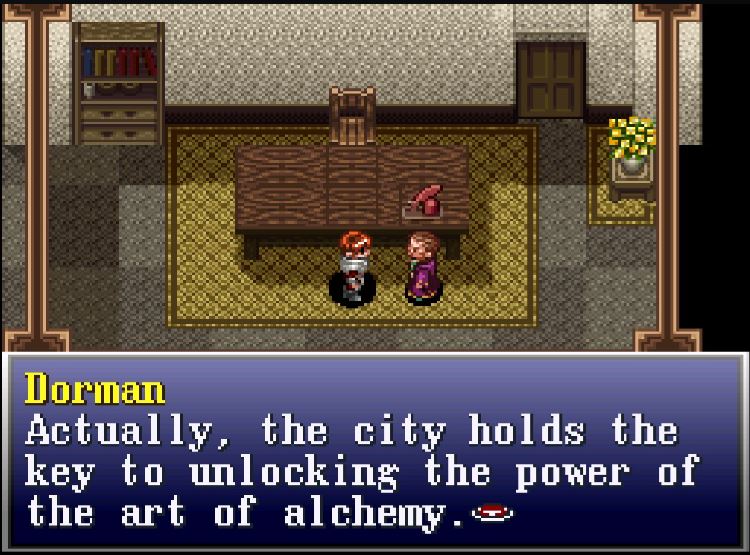
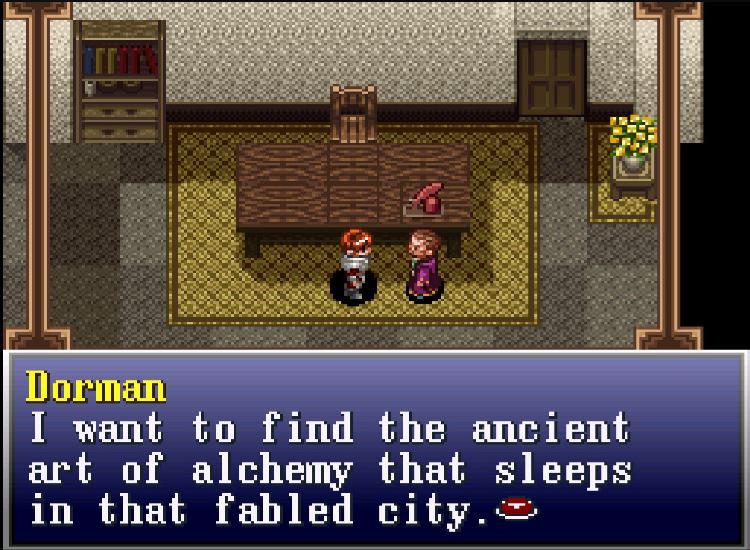
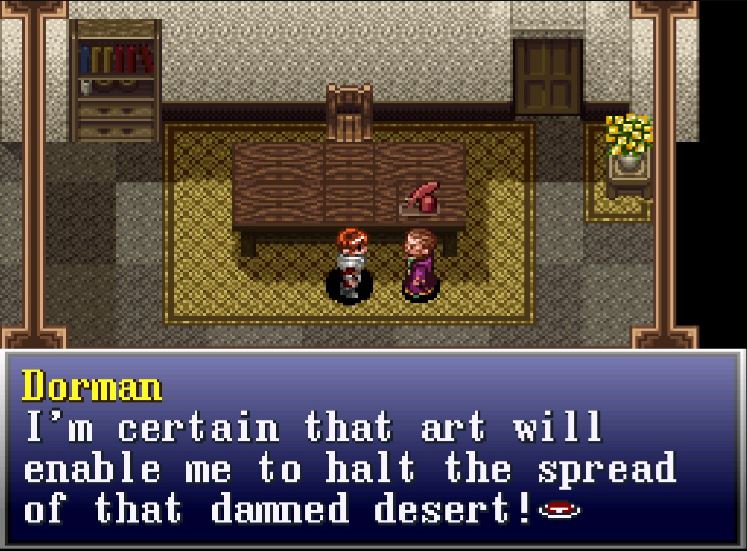
The narrative presents itself simply enough and sets Adol, and by extension the player, on their way as was common with games of that era. However, there is an aspect of this narrative that we must discuss before going any further, which is the inconsistency between iterations of this story. Narratively the events of Ys V are set after the events of 1989’s Ys III: Wanderers from Ys as well as its 2005 remake Oath in Felghana, set before 2016’s Ys VIII: Lacrimosa of Dana. Owners of the Ys 25th Anniversary Artbook as well as the Complete Works supplementary material for Ys V may have noticed that the Complete Works supplementary material game novelization and the artbook portray events in Ys V that don’t happen, primarily in the Super Famicom original release. The biggest example of these changes affects series regular Dogi as well as the heroine of Ys V, Niena.
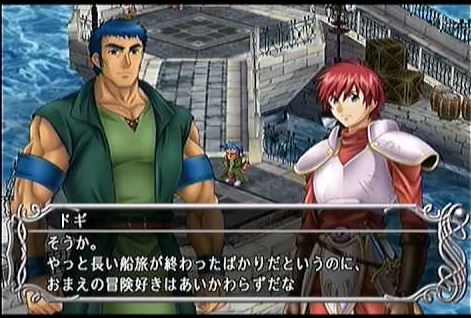
In the original release of the game Dogi is not present throughout the entire game and isn’t even mentioned, however the artbook and novelization both specifically have him involved. Falcom even made an entire new scene for the likes of Oath in Felghana to explain why Dogi and Adol weren’t together at the start of Ys V, and Ys VIII further reinforced that Dogi did not arrive in Xandria with Adol but instead arrived later. This was one of the narrative changes that Arc System and Taito made to their own version of Kefin. While Dogi doesn’t arrive with Adol, he does appear later in the story and plays a part in the events of the game.
The other primary change relates to the new character specifically made for this game, our leading lady Niena. The mysterious girl and her treasured ocarina is the adoptive daughter of Xandrian adventurer Stein who adopted her after he found her collapsed on the edge of the desert one day. The novelization, which was based on the original build of the story, featured her as a young child, whereas in the final game she is a young woman roughly the same age as Adol. The opening of the original SFC release specifically shows her as a child when Stein rescues her from the desert before undergoing a long-time skip to Adol’s arrival in Xandria.
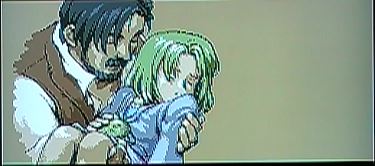
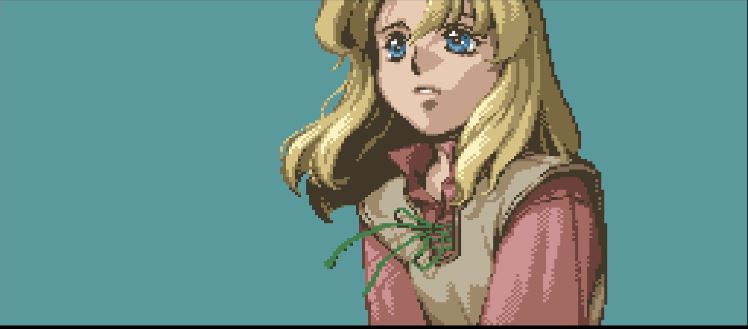
As far as the core narrative is concerned, it definitely is a step up from the likes of Wanderers where it gave you a premise and then drip fed you minor developments until the end game. It was feast or famine in terms of how Wanderers portrayed its storyline and lore. Kefin, on the other hand, while not the deepest story serves its purpose well enough. Thematically is where the game’s narrative shines, which is standard for Ys past and present. This game is also very important regarding certain plotlines that will see dividends paid later in the series, particularly when we get to the likes of Ys IX:Monstrum Nox as this game presents the origins of alchemy in the series. And much like Ys IX, Kefin is not shy about throwing surprises and narrative swerves at the player.
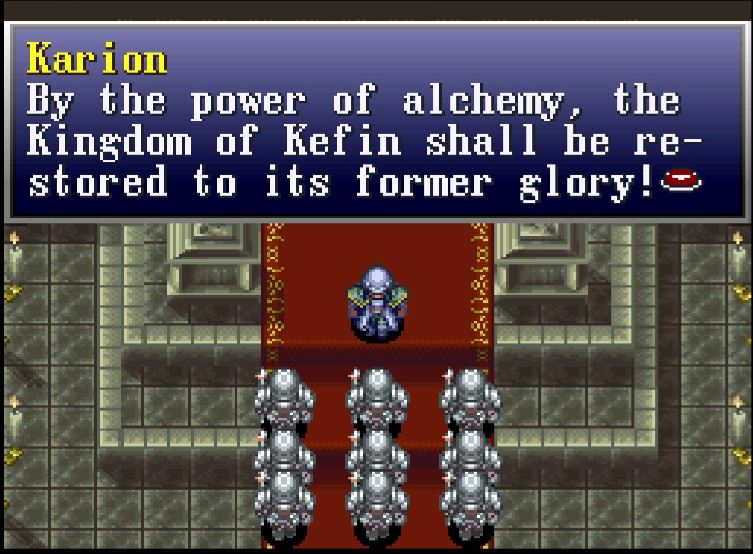
The Taito remake saw fit to expand on certain things and bring Kefin closer to its original story builds while also adding some material that feels tone deaf and out of place, particularly as it relates to the Eldeen. The events of Kefin were fine enough on their own merits without drawing in a story that Falcom seems to love to revisit. We will see plenty of the Eldeen elsewhere in the series, and as such their presence truly wasn’t needed here. Ys V also continues the trend of social commentary within the series and Falcom’s writing acumen in general. Dorman’s methods and ambitions are overbearingly transparent to the point of not being a surprise when the man finally makes his move.
Narratively the in game versions of Kefin do serve their purpose well enough and tell an engaging story. But the novelization goes in greater depth on just about everything and serves to give certain sequences more narrative depth. Particularly as it relates to Adol and Terra’s dynamic. In the game the key moment of that storyline feels undercooked as if there was meant to be more there, and lo and behold in the novelizations, a much more significant scene is described.
Gameplay
When it comes to gameplay the Ys franchise had an exponentially strong and unique start with the bump combat system presenting a style of action RPG very rarely replicated even today. Wanderers was experimental but was held back by tedious and derivative design choices of the era creating a poor product. After some time away from Ys, Falcom wanted to make some changes to the core formula to establish something they could build off of. There is a fine difference in the game development space when it comes to every game in a particular series wanting to accomplish something different vs. something that has no direction. Ys I, II, Dawn of Ys fit into the former, Mask of the Sun and Wanderers fall into the latter. With that in mind did the experimentations of Ys V bare fruit? Absolutely. The work Falcom did here, while rough did lay down the foundation for Ys moving forward for the next decade. But let’s break this down piece-by-piece.
Unlike the bump combat system, Ys V does have you press a button to perform attacks. However Kefin is one of the only titles in the series with swords that have unique properties, Adol’s starting broadsword performs cutting slashes from left to right. But there are also thrusting swords that attack directly in front of the player, placing an importance on character positioning, which was also a core design tenet of the original duology as well as Dawn of Ys.
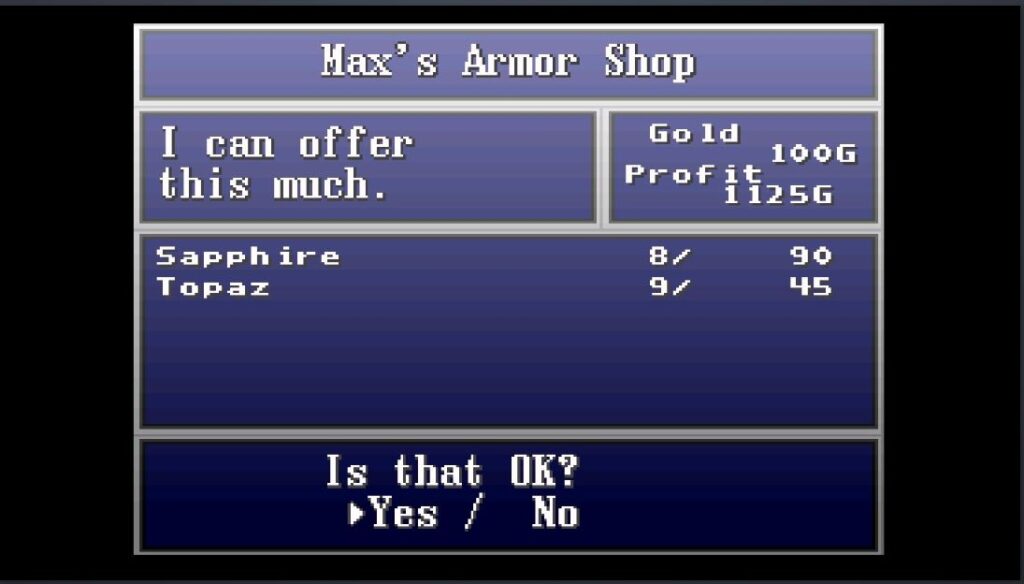
Among the added mechanics was the trading feature. Enemies don’t drop money in Ys V. Instead they drop gemstones that you can trade at stores for sums of gold. A mechanic that Falcom would use regularly in the future for the likes of modern Legend of Heroes
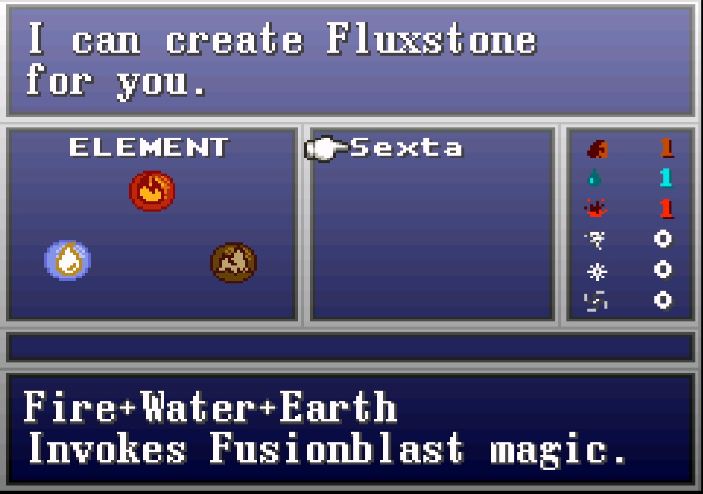
Ys V also saw fit to bring magic back to the series in the form of fluxstones. Collecting three different elemental fragments will allow players to create an elemental magic, and that element depends on the composition of the fragments used. From there, once you charge up a spell you’re ready for Adol to become a wizard once more and this is where some of Ys V’s gameplay balance and dichotomy come into play as some enemies are exclusively weak to magic, whereas some are only vulnerable to physical attacks, raising the question of what method of attack is the best tactic for the situation.
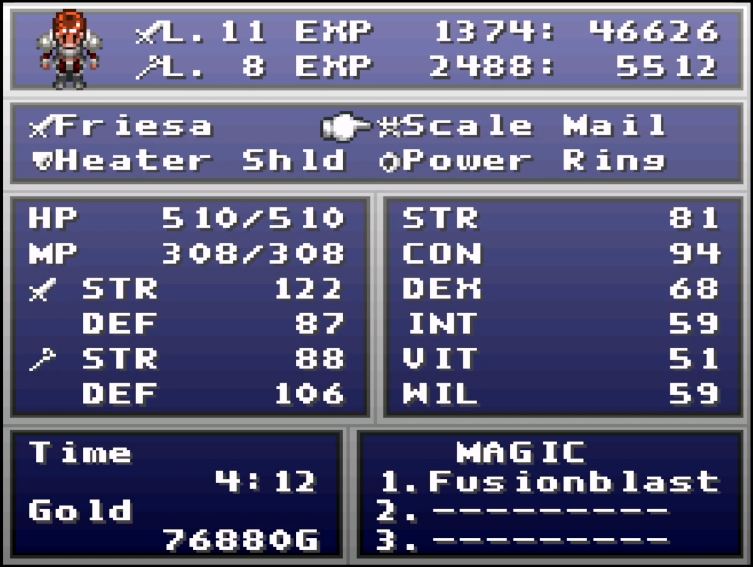
But that isn’t the end of the strength and magic divide, as Adol now has two separate means of progression. Defeating enemies with physical techniques will raise Adol’s physical levels on parameters such as strength, defense while bringing significant health point bonuses. While defeating foes with magic will raise Adol’s magic level, increasing stats such as magic attack, magic defense, magic point pool, and to a lesser extent, HP. In order to reach Adol’s full potential players will need to make use of both styles of combat to respond to the challenges in front of them.
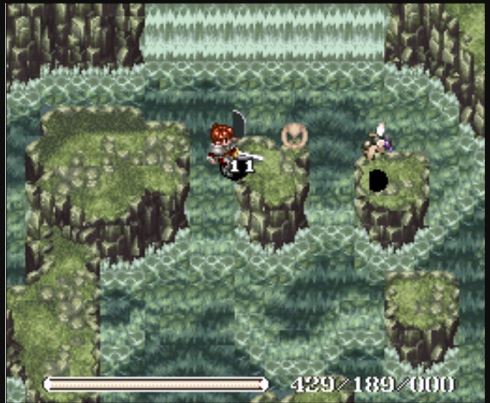
The quality of life features included in Ys V, is a mixed bag, Dawn of Ys pushed ahead in this regard, bringing mechanics to the table such as eight directional movement, allied artificial intelligence, and selective continues, allowing to you to retry a boss if you died in the boss’ room as opposed to being thrown back to your last save. Kefin has one of these things. In fact this is the first Falcom-developed game in the series to allow players to move in eight directions as opposed to the four primary directions. However ,while we got eight directional movement on the ground when it came to the addition of jumping, players can only jump in those four cardinal directions, a design choice that you may find yourself cursing during the scaling of the waterfall sequence, depending on your platforming skill level. Lastly, among the new mechanics is a simple yet critical implementation, and that is none other than guarding. Adol can finally make use of his shield and by holding the guard button you can block attacks from the front.
Presentation & Score
Visually the game is on par with Falcom’s other work with the SFC and other 16-bit consoles of the era. However, aesthetically the game is beautiful. Despite Kefin’s subtitle being Kingdom of Sand we have a variety of biomes for Adol to travel through, including but not limited to; deserts, beaches, caves, urban villages, forests, and more mystical lands I shall allow you to discover for yourself. This is a game in which I do recommend playing on original hardware and a CRT if you can as the grain of the monitor does help immerse you in the land of Xandria.
Ys V is a game with a reputation for being different and nowhere more does that apply more than the soundtrack. Modern fans of the franchise no doubt associate Ys more for its rock ballads, be they symphonic or otherwise. But the series has often struck a nice variety of tones and motifs across its storied 38-year history. This is especially true of Ys V as while it does have more heavy tracks meant to portray power, much of its score is very understated, focusing on tranquility and somber melancholy. A perfect supplement to the environs of Xandria and Kefin.
Conclusion
Ys V is certainly not without its faults, but it does brings several new ideas to the table and served as a blueprint for the next decade of Ys’ development as the mechanics introduced here in Kefin would be refined and iterated over the course of Ys VI, Oath in Felghana, and Origin. Logistically, it is a beta test and breeding ground for ideas that would be later expanded on. To date every mainline Ys game in the franchise has left Japan for an international release, with the exception being this one. And given how every time a new Ys game comes out Kondo gets asked about plans for a Ys V remake I believe it is only a matter of time until it is made and released worldwide. I strongly recommend Ys V to the fans of Falcom as well as retro action RPGs! Special thanks to OmgFloofy for collaborating on this article!
Patron Shout-Out
Special thanks to our loyal Patreon members who help to support work week after week. We couldn’t do what we do without your loving support:
Francesco
Lisa